Solar Monitoring Systems & PV Projects
Solar PV Projects for AC electricity Production
The amount of solar energy that hits a square mile every year is equal to 4 million barrels of oil. So how does a photovoltaic system turn the planet's most abundant source of energy into usable AC electricity? Grouped together in a "solar array," solar panels collect electrons from the sun's light. Still in the form of direct current (DC) electricity, these electrons must be sent through to be converted into AC electricity which we use in our daily basis. Our company offers a turn – key solar PV systems of different sizes including the supplying from global venders and installation by our expert engineering staff. 
|
The activities of our company in this sector includes two main parts:
1. Systems for Site Assessment, Performance Monitoring, and Advanced Solar & wind Monitoring. 2. Supplying and installation of PV systems of different power scales. Site Assessment, Performance Monitoring, and Advanced Solar Monitoring
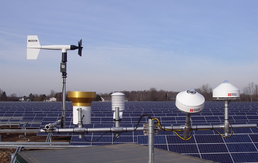
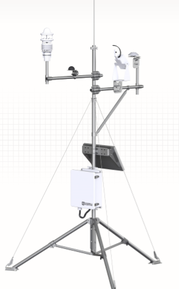
Obtaining accurate site specific meteorological data provides the best method to accurately assess true return on investment for a renewable energy projects including solar power or wind plants installation. Efficient ongoing operation, supply forecasting and site maintenance planning can all be enhanced by the integration of met measurement data. The Campbell Scientific turn-key measurement systems comply with all relevant industry standards and provide field proven reliability. With options on datalogger, sensor, communication, power and mounting these systems can be tailored to meet the project requirements. Station data can either be collected by the client or can be managed through the company highly secure cloud data management service. This offers integrated data quality checks, web based data access 24/7 and options for text or email alerts for a nominal monthly fee. We can offer automated data-acquisition systems specifically designed for solar monitoring applications. Preconfigured systems, designed to meet CAISO standards for solar telemetry, are available for photovoltaic and concentrated solar technology projects of all sizes. Our engineers as well as engineers from Campbell Scientific Inc. work closely with the customer to design highly customized stations, advanced research and development stations, and custom application programming interfaces (API) for data collection. For more details about our solar systems, see the link: https://www.campbellsci.com/solar-energy For wind-resource assessment and power performance we can offer specifically designed systems to meet our customers need. These systems have a wide range of options for measuring wind speed, wind direction, air density, and electric power. Real-time or interval data are stored locally on the datalogger, and can be can be transmitted via all standard communication methods. For more details about our wind systems, see the link: https://www.campbellsci.com/wind-energy |
The Solar PV systems contains:
· String Inverter which are the most common choice for residential solar applications. A string inverter will convert DC electricity from multiple solar panels into usable AC electricity. String inverters are recommended for larger photovoltaic systems with no shading concerns, ground-mounted systems, and non-residential applications. The down side to string inverters is that an entire string of solar panels is affected if one solar panel is shaded. Fire hazard and electrocution risk is higher when you have string-based systems with no built-in power control within the array.
· Micro inverter which are mounted directly behind each solar panel, turning the DC electricity from each solar panel into usable AC electricity. Because each this conversion is happening at the modular level, you're maximizing the potential output of your system. If one solar panel is shaded by a tree, it won't affect the output of any other solar panels because there is no single point of failure. These inverters also eliminate potentially hazardous high voltage DC wiring and make the solar system much easier to expand.
- Solar panels
- Inverter
· String Inverter which are the most common choice for residential solar applications. A string inverter will convert DC electricity from multiple solar panels into usable AC electricity. String inverters are recommended for larger photovoltaic systems with no shading concerns, ground-mounted systems, and non-residential applications. The down side to string inverters is that an entire string of solar panels is affected if one solar panel is shaded. Fire hazard and electrocution risk is higher when you have string-based systems with no built-in power control within the array.
· Micro inverter which are mounted directly behind each solar panel, turning the DC electricity from each solar panel into usable AC electricity. Because each this conversion is happening at the modular level, you're maximizing the potential output of your system. If one solar panel is shaded by a tree, it won't affect the output of any other solar panels because there is no single point of failure. These inverters also eliminate potentially hazardous high voltage DC wiring and make the solar system much easier to expand.
- Installation Mountings which is either ground mountings or roof mountings that contains the rails; clamps; pipes…. and accessories required to adapt the solar cells to the installation location.
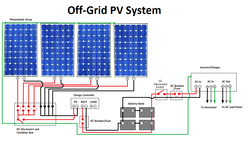
- Charge regulators to regulate the energy from the panels, switching the power on and off as needed. In a straight grid-tie system, this is a function of the inverter, and is built in. If a battery bank is involved, a separate charge controller may be required.
- Batteries bank for physically adapted to the needs of long charges and discharges of the solar system. The battery bank may be lead batteries or lithium-ion batteries and its size and quantities depends on the solar PV project size.
- Accessories including the electric breakers; DC and AC isolation switches; cables; monitoring software and devices; lighting protection…